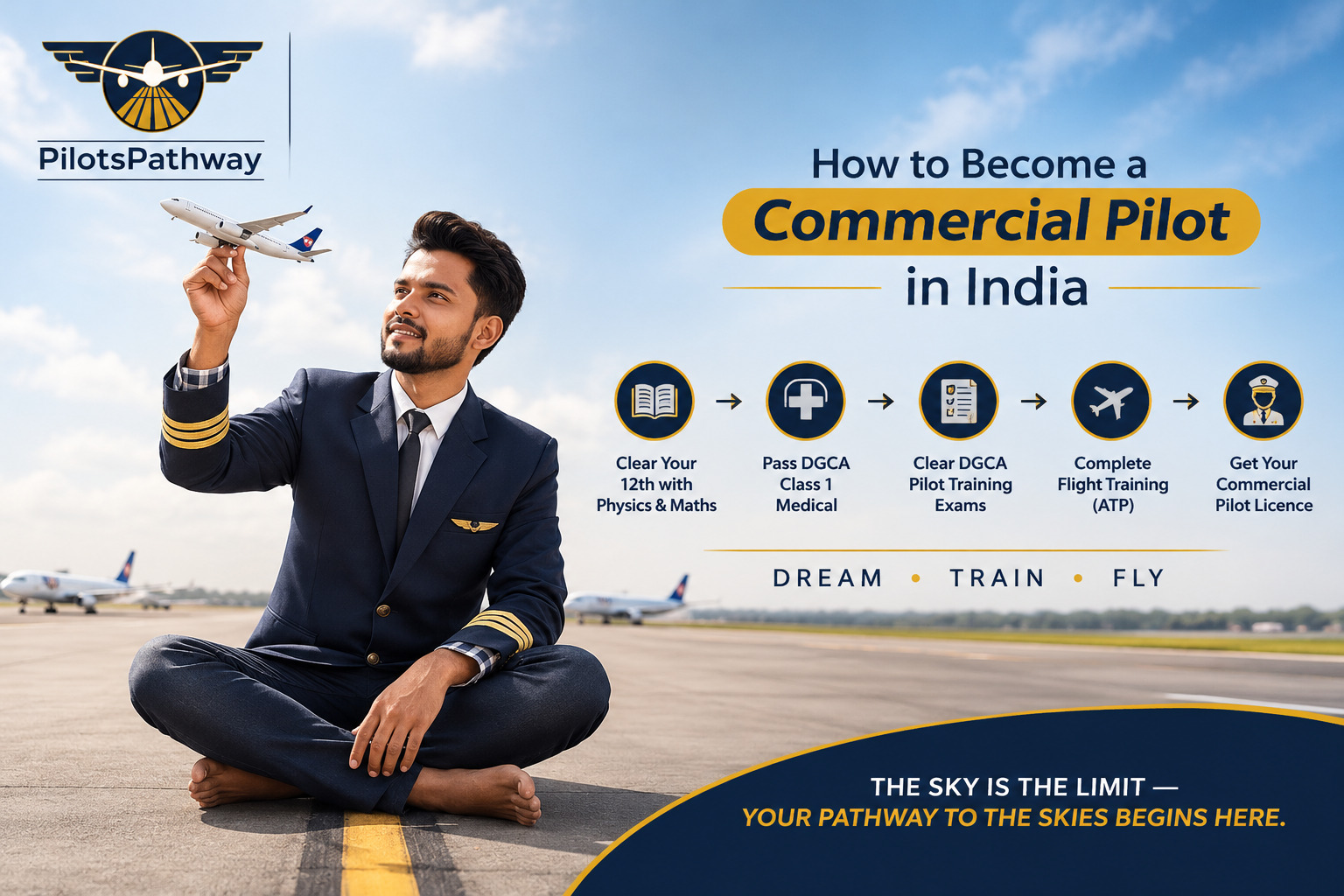
For the aspirants who want to know How To Become a Commercial Pilot In India, the path is well defined and governed by the Directorate General of Civil Aviation (DGCA). You must pass a DGCA Class 1 medical, pass the DGCA theory examinations, have a minimum of 200 flying hours and secure a Commercial Pilot Licence (CPL) at the end of Class 12 studies. It has its own set of rules, time, and costs, of which the 200 hours would be broken into 100 hours as pilot in command, 20 hours of cross-country, 10 hours of instrument flying, and 5 hours of night flying.
The difference between successful candidates and not successful candidates is preparation. With knowledge of the eligibility and actual commercial pilot licence cost in India, CPL training duration and what a pilot will do once he is qualified for CPL, you can save money. Most flying schools quote approximately the total cost of approximately ₹45 to 70 lakh, and the entire duration is approximately 2 years depending on the pace at which the exams are cleared and the flying hours are accumulated.
Also, there’s a massive shift in the near future. In India, only students with physics and maths backgrounds in Class 12 are eligible to take CPL training, and not a single country is doing this anymore, officials said. Now, DGCA has suggested increasing eligibility marks to allow students from all streams to join the pilot training after a few health and other qualifications. In general, students, attending at the institute of arts and commerce, have to go to the NIOS school or any other recognised board for physics and maths till the notification of the rule.
This guide includes all the information you need to plan out your career, eligibility, how to move forward after the 12th, the training schedule, the cost of training, top institutes and how much pilots will earn.
What Is a Commercial Pilot License (CPL)?
A commercial pilot licence is a professional pilot licence issued by DGCA. It will provide commercial flying benefits to the person it is issued to, as outlined on the licence with the aircraft types, medical validity and other endorsements.
A CPL differs from a Private Pilot Licence (PPL). A PPL is primarily for flying for personal use only and is not accepted for commercial operations. CPL stands as the better alternative degree for students who are looking to pursue a more professional career as a pilot in the future.
CPL is not enough to get any candidate into the cockpit of an airline! In addition to the above, airline candidates could benefit from the following:
- A valid Instrument Rating.
- Multi-Engine endorsement.
- An aircraft rating on which they will fly.
- Airline aptitude and Pilot Psychometric Test.
- Simulator assessments.
- Technical and HR interviews.
- Job-specific training and tests.
FSTC’s integrated CPL+ME+IR programme trains aviation students for career opportunities in the airline industry.
Commercial Pilot License Requirements in India
Before you take part in a flying school, see if you do these five things. If a medical documentation issue is identified post fee payment, your course will be delayed and you will have to pay some additional money.
1. Minimum Age
Must be at least 18 on the date of application for CPL. The limit of age is not prescribed by the DGCA, but you will need to continue to meet medical criteria. Some airlines will have their age limits for hiring.
2. Education
Class 12 (10+2) with Physics and Maths (from one of the recognised Boards). Some students will have a college degree as an optional addition to a CPL, but it isn’t strictly required.
3. Arts and Commerce Students
The physics and maths rules have yet to be removed. It was reported that a proposal to change it was put forward in 2025; however, even as per the current rules, DGCA is asking both the subjects. Arts or commerce students will be able to finish their studies in these subjects from NIOS or another approved board. Verify documents with the DGCA before paying any fee.
4. Medical Certificate
Apply any necessary medical first.
- Joining a flying school: a valid Class 2 medical is a normal requirement.
- Requirements to obtain CPL: Valid class 1 medical.
Get your Class 1 medical exam early so you can head off any major bills at the post. Please refer to the latest DGCA Notices and follow them; the medical process is updated as of September 2025.
5. School Admission Requirements
There are no rules established statewide or on the state level. Many ask for:
- Valid DGCA Medical Certificate
- A criminal record check
- A telephone or interview
- Academic and ID documents
Please enquire about a written checklist before paying registration fees for your batch.
Quick Summary
| Requirement | What You Need |
| Age | 18 or older |
| Education | 10+2 with Physics and Maths |
| Degree | Not required |
| Medical | Class 2 to join, Class 1 for the CPL |
| School | Varies by school |
How to Become a Pilot After 12th: Step-by-Step Process
To become a pilot in India begins immediately after Class 12. There’s no need for a college degree, and the process typically takes 2-3 years. The following is a sequential list of the steps.
Step 1: Complete 10+2 with Physics and Maths
Both arts and commerce subjects can be studied in either NIOS or some other recognised board in order to get the base for a CPL. Any fee should only be paid after confirming with DGCA that the idea of the rule change has been proposed.
Step 2: Get Your DGCA Medical
First this. As it is put by one academy, the medical test is more important than your 12th marks. Make sure to begin with a Class 2 medical from a doctor who is recognised by the DGCA because generally, this is sufficient for entry to a flying school.
A Class 1 medical will be the same for the CPL itself, so it is advisable to get this done early to avoid an expensive inconvenience at a later stage.
Step 3: Get Your DGCA Computer Number
This is a unique ID necessary to attend the DGCA theory exam. You need to enrol in the DGCA Pariksha portal and upload all the documents. The amount paid as a fee was reported as being approximately ₹500.
Step 4: Join CPL Ground Classes
Ground School covers the theory required for the exam. Courses are around 4 months (6 to 8 months, according to some academies). The cost of ground classes is approximately ₹2-4 lakh.
Step 5: Clear the DGCA Theory Exams
They cover the aspects of air navigation, aviation meteorology, air regulations, general technical and specific technical. In addition, you must have the RTR (Aero) radio certificate. Examinations were conducted online, and the fee was reported to be ₹2,500 per examination.
Step 6: Complete 200 Flying Hours
This is done at a flying school approved by DGCA in India or abroad. Hours flown: 100 PIC, 20 cross-country, 10 instrument and 5 night. The training encompasses approximately 12 to 18 months of flying time, which is the highest expense at ₹35 to 55 lakh.
Step 7: Pass the Skill Test and Earn Your CPL!
The flying course is conducted by a DGCA examiner who conducts the skill test upon completion of the flying course. Once passed, you make an application for your CPL, which must include a valid Class 1 medical. Training abroad? You’ll have to pass the Indian ground exams again to convert your licence.
Step 8: Get a Type Rating and Apply to Airlines
Flight types are the qualifications you use to fly a certain type of aircraft, for instance, an Airbus A320. It’s typically the final thing before heading to the airport to fly with an airline, and if it’s paid for yourself, it can be roughly about ₹25–35 lakh.
Apply for positions after CPL, and the firm will pay for your type rating course on their own aircraft, or joining an airline cadet pilot programme can be up to ₹1 to 1.2 crore but may include cadet training, type rating and placement.
Stages of Becoming a Pilot in India
As a pilot, his career progresses in stages. All the steps build upon each other, and each opens up an entirely new category of flight. Your pilot’s single-seat trip from lesson to captain’s seat.
| Stage | What You Get | Key Requirement |
| 1. Student Pilot License (SPL) | Fly with an instructor. | Medical, basic exam |
| 2. Private Pilot License (PPL) | Fly for personal use. | Flight training and theory exams |
| 3. Commercial Pilot License (CPL) | Fly for pay. | 200 hours, DGCA exams, Class 1 medical |
| 4. Type Rating | Fly one specific aircraft. | Simulator and airline training |
| 5. First Officer | Work as a co-pilot. | Airline job or hour building |
| 6. Airline Transport Pilot License (ATPL) | Qualify to be Captain. | 1,500 hours, age 21 |
| 7. Captain | Command the aircraft. | Experience and an airline vacancy |
Commercial Pilot License Cost in India
The Commercial Pilot Licence Cost In India ranges from ₹55 to ₹80 lakh. The amount varies from one flying school to another, the type of aircraft, the place where you are flying and whether you train in India or abroad. The fees of DGCA are relatively tiny, and flying training is by far the biggest chunk of the bill. You will find other lower numbers around online comparisons, so always check the numbers school by school.
CPL Cost Breakdown
| Component | Estimated Cost | Notes |
| DGCA Class 2 Medical | ₹6,000-12000 | Done at an approved clinic |
| DGCA Class 1 Medical | ₹15,000-25,000 | Needed before the CPL |
| Ground school (theory) | ₹2 – 4 lakh | Flying school or ground classes |
| DGCA exam fees | ₹2,500-5,000 | Per subject, per attempt |
| Flight training | ₹55-70 lakhs | The largest cost |
| Type Reting | ₹10-15 lakhs | Needed for airline jobs |
| CPL processing (DGCA) | ₹10,000-15,000 | Application and issue |
| Total CPL cost | ₹55-80 lakh | Varies by school |
Commercial Pilot Salary in India
A commercial pilot salary in India varies on the basis of rank, airline, and aircraft. The fresh pilot gets a salary from ₹ 1.5 to 3.5 lakh per month, while an experienced captain can earn ₹ 6-15 lakh or even more per month. The salary of the senior captain in the wide-body aircraft is ₹1 crore per annum.
Salary by Stage
| Stage | Monthly Salary (Approximately) | Typical Role |
| Fresh CPL holder | ₹50,000-1.5 lakh | Instructor, trainee or hour building |
| Junior First Officer | ₹3 – 5 lakh | Co-pilot in the first few years |
| First Officer | ₹4-7 lakh | Experienced co-pilot |
| Senior First Officer | ₹6-12 lakh | Close to the captain upgrade |
| Captain (narrow-body) | ₹6-10 lakh | Commands A320 or B737-type aircraft |
| Senior or wide-body captain | ₹10-15 lakh+ | Long-haul and training roles |
These may be approximate, and sources are subject to change. Industry averages are around ₹3 lakh to ₹5 lakh for a junior first officer, and narrow-bodied pilots earn around ₹5 lakh to ₹10 lakh per month. A few cadets of the airline get ₹60k to ₹1.2 lakh, as they are in the bond period.
Commercial Pilot Training Institutes in India
India has more than 30 flying schools approved by DGCA; choosing an appropriate school is decisive. Your decision will determine how much it costs, how long it takes and whether you will find a job when you are ready. This section will describe what to look for and the difference between government and private schools and what airline programmes are available.
How to Choose a Flying School
Ensure the process to compare schools fairly by using these checks:
- DGCA Approval: The school should be DGCA-approved. If it is not, your flying hours may not be accepted.
- Fleet size: Typically, larger fleets result in shorter waiting days. Verify that it has single- and multi-engine aircraft.
- Student-to-instructor ratio: smaller class sizes ensure better attention and quicker improvement.
- Airline tie-ups: connections with airlines for placement and interviews.
- Good weather and available aircraft: helps you complete your flight hours without delays.
- Placement record: enquire about true statistics when it comes to airline placements.
- Total fees: questions about the fee, simulator, exams, multi-engine rating, etc.
Career Opportunities After Getting a CPL
CPLs can start up a lot of careers, and one of them is with an airline. A graduate may find employment as an airline first officer, charter pilot, cargo pilot, flight instructor or flight corporate pilot. A thing to note is, a CPL is not enough to get a job with a commercial airline, since most commercial airlines prefer the type-rated CPL holders. It is important to plan ahead; a person’s next step often is a huge help.
Airlines, Cargo, Charters and Helicopters
The majority of fresh pilots choose to work for an airline. It begins as a first officer, where you are a co-pilot, as you accumulate flight hours to become a captain. Air India, IndiGo and Akasa are the key domestic recruiters, and there are also international airlines, normally with a type rating and hour requirements for you.
For anyone not interested in helicopters or aeroplanes, cargo operators transport goods and parcels for logistics firms—crucially, more of which are being born with the growth of e-commerce worldwide. Jobs for charter pilots can require fewer hours than airline jobs and may be flown by charter pilots for various reasons, for business executives, for private individuals travelling for important clients or private firms, and other reasons. Helicopter pilots conduct an aerial survey, remote transportation and rescue. This requires additional helicopter training; please check the rules of DGCA first.
Flight Instructor, Aerial Survey and Medevac
Most new CPL holders begin as flight instructors. Whether you’re teaching at a flying school and building your airline experience or you’re building your flying hours while teaching, you will earn as you fly. In addition to your CPL, you will need an instructor rating.
Aerial survey and medevac are specialist positions. Medical evacuator pilots will transport patients from remote locations or accident sites to hospitals; survey pilots fly survey aircraft for data collection or mapping, or both. They are both in the non-scheduled section of flying, which includes charter, corporate and air ambulance flying, and they typically require additional flying experience.
Common Challenges and Mistakes to Avoid
Many simple blunders can cost you months and lakhs of rupees. Keep the following four in mind:
- Avoid the medical first: request your DGCA medical prior to paying for training. If you fail the Class 1 medical later, you can’t obtain a CPL.
- Selecting a school for price: cheap schools and limited aircraft or crowded classes lead to delays that add up. Make a written comparison of the total charge.
- Mistaking the DGCA exams: Failed exams mean extra costs and delays. Begin early and take practice tests.
- No budgeting for type rating: Airlines require one, and it can cost around ₹15-35 lakh if you pay yourself for it. Make plans ahead of time.
Conclusion
The process of becoming a commercial pilot in India needs to be well-prepared, planned financially, and properly guided throughout. Preparing for the DGCA’s eligibility criteria and passing the ground examinations, accumulating 200 hours in the air and even gaining your CPL all bring you further towards your dream of professional flying.
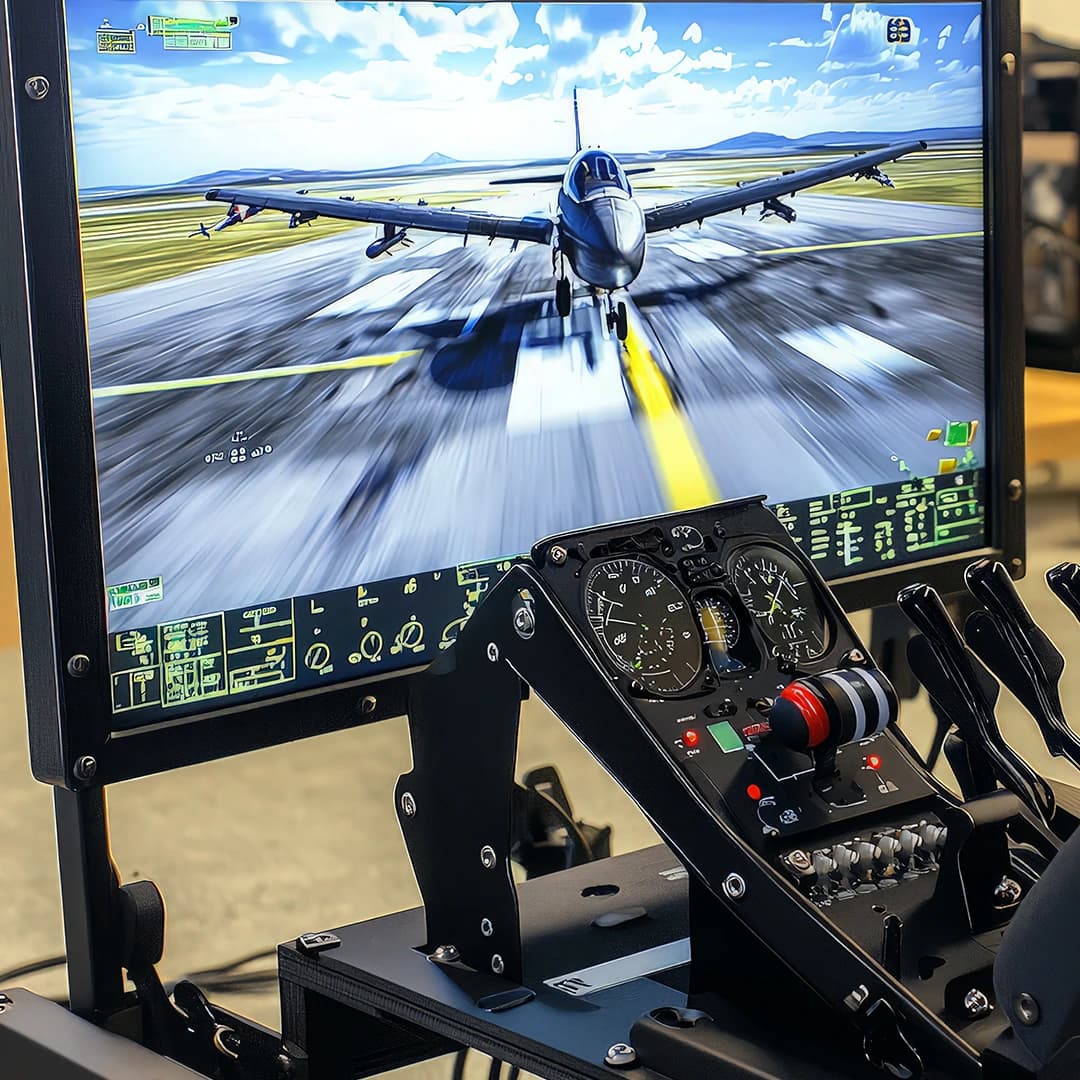
This journey can be a more organised and manageable process if the right towing school is chosen. PilotsPathway assists aspiring pilots to train by using its DGCA ground classes, expert mentorship, flight simulator training, CPL flight training guidance and airline cadet pilot preparation. Students can choose India or abroad flight schools with guidance, as per their career goals and budget.
If you wish to enrol for the programme after class 12th or want to change your jobs, the first thing you should know is your eligibility, medical conditions and training. Join PilotsPathway for the right guidance and a challenging step towards flying your dreams.
Looking to start your journey into aviation? Explore training programmes and meet with the team at PilotsPathway about your pilot career.
Frequently Asked Questions (FAQs)
How can I become a commercial pilot in India after 12th?
To become a commercial pilot in India, complete Class 12 with physics and mathematics, obtain a DGCA medical certificate, clear the required theory exams and complete 200 flying hours at a DGCA-approved flying school. You can then apply for your Commercial Pilot Licence (CPL).
What is the eligibility for commercial pilot training in India?
You must be at least 18 years old to obtain a CPL, have passed Class 12 with Physics and Mathematics from a recognised board and hold a valid DGCA Class 1 medical certificate.
Can arts or commerce students become commercial pilots in India?
Yes, arts and commerce students can pursue a commercial pilot career by completing physics and mathematics through NIOS or another recognised board, subject to current DGCA requirements.
What is the total cost of becoming a commercial pilot in India?
The estimated cost of CPL training in India ranges from ₹55 lakh to ₹80 lakh, depending on the flying school, training location, aircraft and additional ratings. Type rating may involve a separate expense.
How many years does it take to become a commercial pilot in India?
It generally takes around 2 to 3 years to become a commercial pilot. The duration depends on how quickly you clear DGCA exams, complete your flying hours and finish the required licence procedures.
Is a DGCA Class 1 medical certificate compulsory for a CPL?
Yes, a valid DGCA Class 1 medical certificate is required to obtain a commercial pilot licence. Students can generally begin flying school admission with a Class 2 medical, depending on the school’s requirements.
How many flying hours are required for a commercial pilot licence in India?
You need a minimum of 200 flying hours for a CPL in India. These include pilot-in-command, cross-country, instrument and night flying experience as prescribed by DGCA regulations.
What exams are required to become a commercial pilot in India?
Candidates must clear DGCA theory examinations in subjects such as Air Navigation, Aviation Meteorology, Air Regulations, Technical General and Technical Specific. They also need the required RTR (Aero) radio qualification.
What is the salary of a commercial pilot in India?
A commercial pilot’s salary depends on experience, airline and aircraft type. Junior first officers may earn around ₹3–5 lakh per month, while experienced captains can earn ₹8–15 lakh or more per month.
How can I prepare for DGCA exams and choose the right flying school?
Start with structured DGCA ground classes, practise exam questions and understand the training requirements. Compare flying schools based on DGCA approval, aircraft availability, instructor experience, training costs and student support. PilotsPathway also offers DGCA ground training, expert mentorship and pilot career guidance to help aspiring pilots plan their next steps.
admin
Verified Flight CounselorAviation specialist and certified flight training advisor at PilotsPathway.